Marketers
A shared team for strategy, copy, design and campaigns, every month.
Website developmentCapability pages, useful proof and a direct path to an enquiry.
BrandingPositioning, identity and sales material that explain why you're worth choosing.
SEO and AI searchGet found on Google and in AI answers by the people who buy what you make.
Performance marketingGoogle, LinkedIn and Meta ads measured on qualified enquiries.
AI automation & CRMEvery enquiry gets an owner and a next step, with human review.
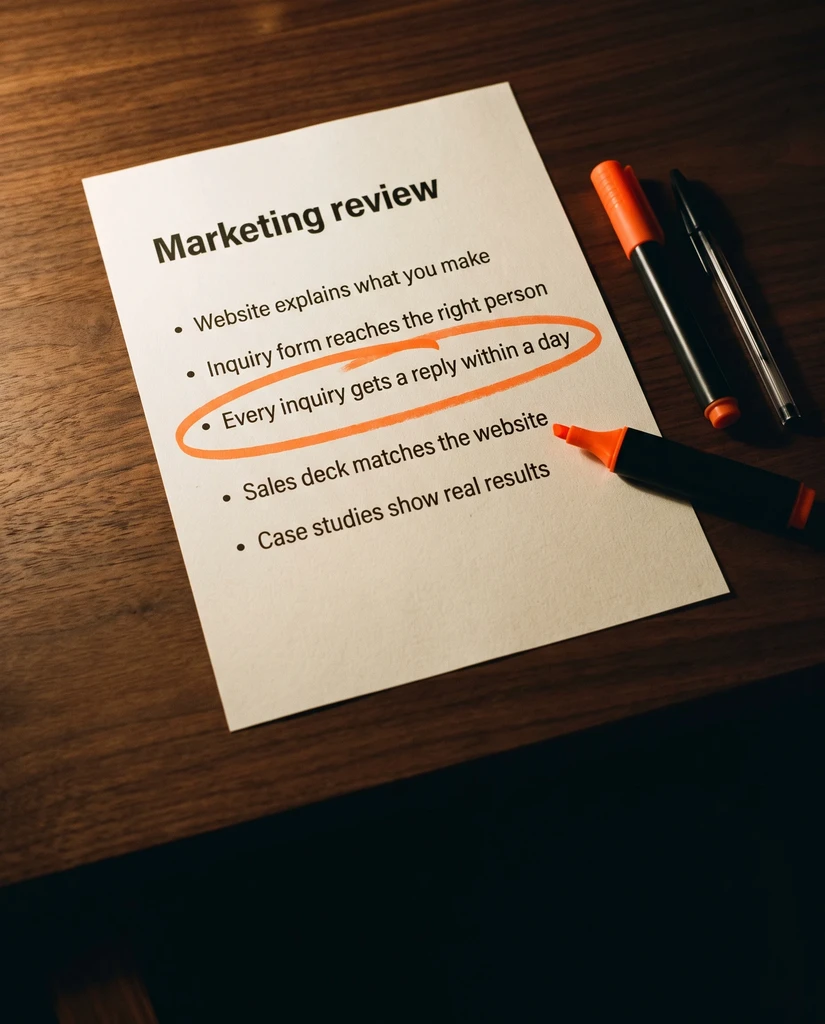 Two minutes, no email neededFind the one thing to fix firstTake the quiz→
Generative Engine Optimization in 2026: How to Get Your Brand Cited by ChatGPT, Gemini and Google AI Mode
ChatGPT, Gemini and Google AI Mode now answer your customers’ questions. Learn the 5-layer GEO framework we use to get brands cited in AI answers.

Your customers have stopped searching. They have started asking. And if your brand is not in the answer, you do not exist.
That is not a scare tactic. It is the arithmetic of 2026. ChatGPT crossed 900 million weekly active users in February, with roughly a quarter of its messages being information-seeking queries, which works out to around 600 million search-style questions a day. Google’s AI Overviews now reach two billion people a month, and they appear on 88.5% of buying-decision searches. Adobe measured AI-referred shoppers converting 42% better than non-AI traffic in March 2026. The people your business needs are asking machines who to trust, and the machines are answering with a shortlist.
This is the world Generative Engine Optimization (GEO) was built for. In this guide we break down what GEO actually is, why it is the most searched marketing skill of the year, and the exact framework we use at Debate Marketers to get client brands named inside AI answers.
Key takeaways
AI answers now sit in front of almost every commercial search — 86.7% of business-intent queries and 88.5% of buying-decision queries.
GEO competes for a citation inside a synthesised answer, not a position on a results page.
Citability is built in five layers: entity clarity, answer-first architecture, proprietary proof, off-site presence and measurement.
Fewer clicks, better clicks — AI-referred visitors convert 42% better and bounce 33% less.
You can run a meaningful GEO sprint in 30 days, and most of your competitors have not started.
What GEO actually is (and what it is not)
Generative Engine Optimization is the practice of making your brand, content and data easy for large language models to find, understand, trust and cite. Where traditional SEO competes for a position on a results page, GEO competes for a mention inside a synthesised answer, whether that answer appears in ChatGPT, Google AI Mode, Gemini, Perplexity, Claude or Microsoft Copilot.
GEO is not a replacement for SEO. The two overlap heavily: AI systems still crawl the web, still favour authoritative domains and still reward clear structure. The difference is in what happens after retrieval. A search engine ranks pages. A generative engine reads them, compresses them and decides which two or three sources deserve credit. Pew Research found that 88% of Google AI summaries cite three or more sources and only 1% cite a single source. Your job is to be one of those three.
GEO is also not “write for robots.” The content that gets cited most consistently is content that a sceptical human expert would also respect: specific, sourced, structured and opinionated.
Why September 2026 is the tipping point
Three things happened this year that turned GEO from a conference buzzword into a board-level line item.
First, AI Overviews swallowed commercial intent. Peec AI’s tracking shows AI Overviews appeared on 56.9% of business-intent searches in April 2025 and 86.7% by April 2026. For definitions, comparisons and how-to queries, coverage sits at 93 to 97%. If you sell anything that people compare before buying, an AI summary now sits between you and the click almost every time.
Second, the click economy changed shape. When an AI summary appears, users click a traditional result in only 8% of visits, versus 15% without one, and 26% of those sessions end without any click at all. Bain estimates roughly 60% of searches now end without a website visit. Organic traffic across categories has fallen anywhere from 15% to 64% depending on the vertical.
Third, the traffic that does arrive is worth more. Adobe’s holiday 2025 data showed AI-referred visitors spending 45% more time on site, viewing 13% more pages and bouncing 33% less. Traffic to US retail sites from generative AI tools grew 693% year on year. Fewer clicks, better clicks. That is a trade most CFOs will take, but only if you are the brand being clicked.
The engines are not one engine
A common mistake is to treat “AI search” as a single channel. It is not. Similarweb’s June 2026 data shows ChatGPT’s share of generative AI web traffic fell from 76% to 53% in a year while Gemini climbed to 28% and Claude to 9%. Each platform retrieves differently. Google’s AI Mode and AI Overviews lean on Google’s own index and reward the same signals as classic search. ChatGPT and Perplexity lean on live web retrieval and are heavily influenced by third-party listicles, review platforms and community threads. Reddit ranks first or second among cited domains across all five major AI platforms.
The practical implication is that your GEO plan cannot live only on your own website. It has to cover the places the models go when they want a second opinion.
The Debate GEO Framework: five layers of citability
We think about GEO as five layers stacked on top of each other. Skip a layer and the ones above it wobble.
Layer 1: Entity clarity
Before a model can recommend you, it has to know who you are. That means one consistent brand name, description, category and location across your website, Google Business Profile, LinkedIn, Crunchbase, industry directories and review platforms. WordStream’s 2026 research flags inconsistent signals across platforms as the leading cause of AI systems describing businesses inaccurately. Write a single 60-word “entity statement” (who you are, what you do, for whom, where) and use it everywhere. Mark it up with Organization schema on your site.
Layer 2: Answer-first content architecture
Models weight the opening of a page heavily. WordStream reports the first 150 to 200 words now matter most for AI interpretation. Every important page should open with a direct, quotable answer to the question the page targets, followed by the evidence. Use descriptive H2s phrased as questions, keep paragraphs short, and add a compact FAQ block with FAQPage schema. Comparison tables, numbered steps and definition boxes are the formats models lift most readily.
Layer 3: Proprietary proof
Generic advice has become worthless because models can generate it themselves. What they cannot generate is your data. Peec AI’s analysis of 232,000 citations found listicles earning outsized citation share, with 52% of listicles on ChatGPT achieving high citation rates despite being less than a fifth of cited URLs. The listicles that win are the ones with original numbers. Publish a quarterly benchmark from your own client or customer data, a survey, a teardown, a case study with real figures. First-party insight is the proof layer that separates you from the synthetic noise.
Layer 4: Off-site presence where models look
Roughly one in ten AI search citations comes from vendor listicles, and Reddit dominates across platforms. Earn your place in the “best X for Y” articles in your category, get listed on the review platforms that matter for your industry, and participate authentically in the community threads where your buyers ask questions. Social Media Today’s 2026 trend report warns that Reddit users are tiring of obvious brand intrusion, so the rule is contribute first, mention second.
Layer 5: Measure what the machines say
You cannot manage what you do not monitor. Run a fixed set of 30 to 50 buyer-intent prompts across ChatGPT, Gemini, AI Mode and Perplexity every month. Record whether you are mentioned, how you are described, who else is named and which sources are cited. Track AI referral traffic separately in GA4 using referrer filters for chatgpt.com, gemini.google.com and perplexity.ai. The goal is a share-of-answer metric that sits next to your share-of-voice and share-of-search numbers.
A 30-day GEO sprint you can run this month
Week 1: Audit. Ask each major AI engine ten questions a buyer would ask about your category. Screenshot the answers. Note who is cited and why. Check your entity consistency across the ten most important third-party profiles.
Week 2: Fix the foundations. Rewrite the openings of your top 20 pages so the answer comes first. Add Organization, Article and FAQPage schema. Publish your entity statement. Compress bloated pages and remove thin ones.
Week 3: Build proof. Turn one internal dataset into a published benchmark or study. Convert your best case study into a numbers-first format with a clear headline result.
Week 4: Earn placement. Pitch three category listicles and two review platforms. Answer five community threads with substance. Set up the monthly prompt tracker and baseline your share-of-answer.
What this means for paid media
GEO is not just an organic play. Google announced sponsored retail listings and Direct Offers inside AI Mode at Marketing Live 2026, along with the Universal Commerce Protocol that lets shoppers browse and check out inside the AI interface, with Etsy, Wayfair, Shopify, Target and Walmart on board. The same product feeds, structured data and landing page clarity that get you cited organically are also the inputs that make AI-driven ad placements work. Fix the foundations once and both channels benefit.
The uncomfortable truth
Most businesses will read this, nod, and keep publishing the same keyword-stuffed blog posts they published in 2022. That is good news for you. GEO in 2026 is where SEO was in 2008: the rules are visible, the competition is asleep and the compounding advantage goes to whoever starts first.
At Debate Marketers we run GEO audits for brands that want to know exactly what ChatGPT, Gemini and Google AI Mode are saying about them, and what it will take to change the answer. If you would like yours, get in touch. The machines are already talking about your category. The only question is whether they are talking about you.
Frequently asked questions
Is GEO different from AEO (Answer Engine Optimization)?
The terms overlap. AEO historically referred to featured snippets and voice assistants; GEO refers specifically to large language model answers. In practice the tactics converge.
Does GEO work for local businesses?
Yes. Entity consistency, reviews and Google Business Profile quality are among the strongest signals for local queries in AI Mode and AI Overviews.
How long before results show?
Foundational fixes influence answers within four to eight weeks because AI engines refresh retrieval frequently. Earning third-party citations takes longer, typically one to two quarters.
Can I block AI crawlers instead?
You can, but you will disappear from the answers your competitors are being named in. For most brands, visibility beats protection.
Sources
Peec AI, “70+ Generative Engine Optimization Statistics for 2026”; Similarweb, “AI Search Stats in 2026”; Pew Research Center, AI summaries and click behaviour (2025); Adobe Analytics, holiday 2025 and March 2026 AI traffic data; WordStream, “The Biggest AI Marketing Trends for 2026”; Search Engine Land, Google Marketing Live 2026 coverage; Social Media Today, “7 Digital Marketing Trends to Watch for in 2026”.
We plan and run admissions campaigns, websites, SEO and AI search, ads and CRM follow-up for schools, manufacturers and growing brands, from teams in New Delhi and Malta.
Published 5 September 2026. Updated 3 October 2026.
More articles

How to Find Buyers for Export: Marketing and Branding That Win Orders
How import and export companies find buyers in 2026: buyer finder tools, trade data, B2B portals, LinkedIn and AI search, and the branding that wins orders.

AEO and GEO Best Practices for 2026: A Guide for B2B and Retail
What Google, Microsoft and OpenAI say about AEO and GEO, what studies show gets cited, and best practices for B2B pages, product feeds and measurement in 2026.

How to Choose an SEO Agency in 2026: A B2B and Retail Checklist
What to ask an SEO agency, how to score proposals, what AEO and GEO work should cover, what SEO costs in 2026 and the contract terms to agree before signing.
Generative Engine Optimization in 2026: How to Get Your Brand Cited by ChatGPT, Gemini and Google AI Mode
ChatGPT, Gemini and Google AI Mode now answer your customers’ questions. Learn the 5-layer GEO framework we use to get brands cited in AI answers.
Your customers have stopped searching. They have started asking. And if your brand is not in the answer, you do not exist.
That is not a scare tactic. It is the arithmetic of 2026. ChatGPT crossed 900 million weekly active users in February, with roughly a quarter of its messages being information-seeking queries, which works out to around 600 million search-style questions a day. Google’s AI Overviews now reach two billion people a month, and they appear on 88.5% of buying-decision searches. Adobe measured AI-referred shoppers converting 42% better than non-AI traffic in March 2026. The people your business needs are asking machines who to trust, and the machines are answering with a shortlist.
This is the world Generative Engine Optimization (GEO) was built for. In this guide we break down what GEO actually is, why it is the most searched marketing skill of the year, and the exact framework we use at Debate Marketers to get client brands named inside AI answers.
Key takeaways
AI answers now sit in front of almost every commercial search — 86.7% of business-intent queries and 88.5% of buying-decision queries.
GEO competes for a citation inside a synthesised answer, not a position on a results page.
Citability is built in five layers: entity clarity, answer-first architecture, proprietary proof, off-site presence and measurement.
Fewer clicks, better clicks — AI-referred visitors convert 42% better and bounce 33% less.
You can run a meaningful GEO sprint in 30 days, and most of your competitors have not started.
What GEO actually is (and what it is not)
Generative Engine Optimization is the practice of making your brand, content and data easy for large language models to find, understand, trust and cite. Where traditional SEO competes for a position on a results page, GEO competes for a mention inside a synthesised answer, whether that answer appears in ChatGPT, Google AI Mode, Gemini, Perplexity, Claude or Microsoft Copilot.
GEO is not a replacement for SEO. The two overlap heavily: AI systems still crawl the web, still favour authoritative domains and still reward clear structure. The difference is in what happens after retrieval. A search engine ranks pages. A generative engine reads them, compresses them and decides which two or three sources deserve credit. Pew Research found that 88% of Google AI summaries cite three or more sources and only 1% cite a single source. Your job is to be one of those three.
GEO is also not “write for robots.” The content that gets cited most consistently is content that a sceptical human expert would also respect: specific, sourced, structured and opinionated.
Why September 2026 is the tipping point
Three things happened this year that turned GEO from a conference buzzword into a board-level line item.
First, AI Overviews swallowed commercial intent. Peec AI’s tracking shows AI Overviews appeared on 56.9% of business-intent searches in April 2025 and 86.7% by April 2026. For definitions, comparisons and how-to queries, coverage sits at 93 to 97%. If you sell anything that people compare before buying, an AI summary now sits between you and the click almost every time.
Second, the click economy changed shape. When an AI summary appears, users click a traditional result in only 8% of visits, versus 15% without one, and 26% of those sessions end without any click at all. Bain estimates roughly 60% of searches now end without a website visit. Organic traffic across categories has fallen anywhere from 15% to 64% depending on the vertical.
Third, the traffic that does arrive is worth more. Adobe’s holiday 2025 data showed AI-referred visitors spending 45% more time on site, viewing 13% more pages and bouncing 33% less. Traffic to US retail sites from generative AI tools grew 693% year on year. Fewer clicks, better clicks. That is a trade most CFOs will take, but only if you are the brand being clicked.
The engines are not one engine
A common mistake is to treat “AI search” as a single channel. It is not. Similarweb’s June 2026 data shows ChatGPT’s share of generative AI web traffic fell from 76% to 53% in a year while Gemini climbed to 28% and Claude to 9%. Each platform retrieves differently. Google’s AI Mode and AI Overviews lean on Google’s own index and reward the same signals as classic search. ChatGPT and Perplexity lean on live web retrieval and are heavily influenced by third-party listicles, review platforms and community threads. Reddit ranks first or second among cited domains across all five major AI platforms.
The practical implication is that your GEO plan cannot live only on your own website. It has to cover the places the models go when they want a second opinion.
The Debate GEO Framework: five layers of citability
We think about GEO as five layers stacked on top of each other. Skip a layer and the ones above it wobble.
Layer 1: Entity clarity
Before a model can recommend you, it has to know who you are. That means one consistent brand name, description, category and location across your website, Google Business Profile, LinkedIn, Crunchbase, industry directories and review platforms. WordStream’s 2026 research flags inconsistent signals across platforms as the leading cause of AI systems describing businesses inaccurately. Write a single 60-word “entity statement” (who you are, what you do, for whom, where) and use it everywhere. Mark it up with Organization schema on your site.
Layer 2: Answer-first content architecture
Models weight the opening of a page heavily. WordStream reports the first 150 to 200 words now matter most for AI interpretation. Every important page should open with a direct, quotable answer to the question the page targets, followed by the evidence. Use descriptive H2s phrased as questions, keep paragraphs short, and add a compact FAQ block with FAQPage schema. Comparison tables, numbered steps and definition boxes are the formats models lift most readily.
Layer 3: Proprietary proof
Generic advice has become worthless because models can generate it themselves. What they cannot generate is your data. Peec AI’s analysis of 232,000 citations found listicles earning outsized citation share, with 52% of listicles on ChatGPT achieving high citation rates despite being less than a fifth of cited URLs. The listicles that win are the ones with original numbers. Publish a quarterly benchmark from your own client or customer data, a survey, a teardown, a case study with real figures. First-party insight is the proof layer that separates you from the synthetic noise.
Layer 4: Off-site presence where models look
Roughly one in ten AI search citations comes from vendor listicles, and Reddit dominates across platforms. Earn your place in the “best X for Y” articles in your category, get listed on the review platforms that matter for your industry, and participate authentically in the community threads where your buyers ask questions. Social Media Today’s 2026 trend report warns that Reddit users are tiring of obvious brand intrusion, so the rule is contribute first, mention second.
Layer 5: Measure what the machines say
You cannot manage what you do not monitor. Run a fixed set of 30 to 50 buyer-intent prompts across ChatGPT, Gemini, AI Mode and Perplexity every month. Record whether you are mentioned, how you are described, who else is named and which sources are cited. Track AI referral traffic separately in GA4 using referrer filters for chatgpt.com, gemini.google.com and perplexity.ai. The goal is a share-of-answer metric that sits next to your share-of-voice and share-of-search numbers.
A 30-day GEO sprint you can run this month
Week 1: Audit. Ask each major AI engine ten questions a buyer would ask about your category. Screenshot the answers. Note who is cited and why. Check your entity consistency across the ten most important third-party profiles.
Week 2: Fix the foundations. Rewrite the openings of your top 20 pages so the answer comes first. Add Organization, Article and FAQPage schema. Publish your entity statement. Compress bloated pages and remove thin ones.
Week 3: Build proof. Turn one internal dataset into a published benchmark or study. Convert your best case study into a numbers-first format with a clear headline result.
Week 4: Earn placement. Pitch three category listicles and two review platforms. Answer five community threads with substance. Set up the monthly prompt tracker and baseline your share-of-answer.
What this means for paid media
GEO is not just an organic play. Google announced sponsored retail listings and Direct Offers inside AI Mode at Marketing Live 2026, along with the Universal Commerce Protocol that lets shoppers browse and check out inside the AI interface, with Etsy, Wayfair, Shopify, Target and Walmart on board. The same product feeds, structured data and landing page clarity that get you cited organically are also the inputs that make AI-driven ad placements work. Fix the foundations once and both channels benefit.
The uncomfortable truth
Most businesses will read this, nod, and keep publishing the same keyword-stuffed blog posts they published in 2022. That is good news for you. GEO in 2026 is where SEO was in 2008: the rules are visible, the competition is asleep and the compounding advantage goes to whoever starts first.
At Debate Marketers we run GEO audits for brands that want to know exactly what ChatGPT, Gemini and Google AI Mode are saying about them, and what it will take to change the answer. If you would like yours, get in touch. The machines are already talking about your category. The only question is whether they are talking about you.
Frequently asked questions
Is GEO different from AEO (Answer Engine Optimization)?
The terms overlap. AEO historically referred to featured snippets and voice assistants; GEO refers specifically to large language model answers. In practice the tactics converge.
Does GEO work for local businesses?
Yes. Entity consistency, reviews and Google Business Profile quality are among the strongest signals for local queries in AI Mode and AI Overviews.
How long before results show?
Foundational fixes influence answers within four to eight weeks because AI engines refresh retrieval frequently. Earning third-party citations takes longer, typically one to two quarters.
Can I block AI crawlers instead?
You can, but you will disappear from the answers your competitors are being named in. For most brands, visibility beats protection.
Sources
Peec AI, “70+ Generative Engine Optimization Statistics for 2026”; Similarweb, “AI Search Stats in 2026”; Pew Research Center, AI summaries and click behaviour (2025); Adobe Analytics, holiday 2025 and March 2026 AI traffic data; WordStream, “The Biggest AI Marketing Trends for 2026”; Search Engine Land, Google Marketing Live 2026 coverage; Social Media Today, “7 Digital Marketing Trends to Watch for in 2026”.
We plan and run admissions campaigns, websites, SEO and AI search, ads and CRM follow-up for schools, manufacturers and growing brands, from teams in New Delhi and Malta.
Published 5 September 2026. Updated 3 October 2026.
More articles
How to Find Buyers for Export: Marketing and Branding That Win Orders
How import and export companies find buyers in 2026: buyer finder tools, trade data, B2B portals, LinkedIn and AI search, and the branding that wins orders.
AEO and GEO Best Practices for 2026: A Guide for B2B and Retail
What Google, Microsoft and OpenAI say about AEO and GEO, what studies show gets cited, and best practices for B2B pages, product feeds and measurement in 2026.
How to Choose an SEO Agency in 2026: A B2B and Retail Checklist
What to ask an SEO agency, how to score proposals, what AEO and GEO work should cover, what SEO costs in 2026 and the contract terms to agree before signing.
Generative Engine Optimization in 2026: How to Get Your Brand Cited by ChatGPT, Gemini and Google AI Mode
ChatGPT, Gemini and Google AI Mode now answer your customers’ questions. Learn the 5-layer GEO framework we use to get brands cited in AI answers.
Your customers have stopped searching. They have started asking. And if your brand is not in the answer, you do not exist.
That is not a scare tactic. It is the arithmetic of 2026. ChatGPT crossed 900 million weekly active users in February, with roughly a quarter of its messages being information-seeking queries, which works out to around 600 million search-style questions a day. Google’s AI Overviews now reach two billion people a month, and they appear on 88.5% of buying-decision searches. Adobe measured AI-referred shoppers converting 42% better than non-AI traffic in March 2026. The people your business needs are asking machines who to trust, and the machines are answering with a shortlist.
This is the world Generative Engine Optimization (GEO) was built for. In this guide we break down what GEO actually is, why it is the most searched marketing skill of the year, and the exact framework we use at Debate Marketers to get client brands named inside AI answers.
Key takeaways
AI answers now sit in front of almost every commercial search — 86.7% of business-intent queries and 88.5% of buying-decision queries.
GEO competes for a citation inside a synthesised answer, not a position on a results page.
Citability is built in five layers: entity clarity, answer-first architecture, proprietary proof, off-site presence and measurement.
Fewer clicks, better clicks — AI-referred visitors convert 42% better and bounce 33% less.
You can run a meaningful GEO sprint in 30 days, and most of your competitors have not started.
What GEO actually is (and what it is not)
Generative Engine Optimization is the practice of making your brand, content and data easy for large language models to find, understand, trust and cite. Where traditional SEO competes for a position on a results page, GEO competes for a mention inside a synthesised answer, whether that answer appears in ChatGPT, Google AI Mode, Gemini, Perplexity, Claude or Microsoft Copilot.
GEO is not a replacement for SEO. The two overlap heavily: AI systems still crawl the web, still favour authoritative domains and still reward clear structure. The difference is in what happens after retrieval. A search engine ranks pages. A generative engine reads them, compresses them and decides which two or three sources deserve credit. Pew Research found that 88% of Google AI summaries cite three or more sources and only 1% cite a single source. Your job is to be one of those three.
GEO is also not “write for robots.” The content that gets cited most consistently is content that a sceptical human expert would also respect: specific, sourced, structured and opinionated.
Why September 2026 is the tipping point
Three things happened this year that turned GEO from a conference buzzword into a board-level line item.
First, AI Overviews swallowed commercial intent. Peec AI’s tracking shows AI Overviews appeared on 56.9% of business-intent searches in April 2025 and 86.7% by April 2026. For definitions, comparisons and how-to queries, coverage sits at 93 to 97%. If you sell anything that people compare before buying, an AI summary now sits between you and the click almost every time.
Second, the click economy changed shape. When an AI summary appears, users click a traditional result in only 8% of visits, versus 15% without one, and 26% of those sessions end without any click at all. Bain estimates roughly 60% of searches now end without a website visit. Organic traffic across categories has fallen anywhere from 15% to 64% depending on the vertical.
Third, the traffic that does arrive is worth more. Adobe’s holiday 2025 data showed AI-referred visitors spending 45% more time on site, viewing 13% more pages and bouncing 33% less. Traffic to US retail sites from generative AI tools grew 693% year on year. Fewer clicks, better clicks. That is a trade most CFOs will take, but only if you are the brand being clicked.
The engines are not one engine
A common mistake is to treat “AI search” as a single channel. It is not. Similarweb’s June 2026 data shows ChatGPT’s share of generative AI web traffic fell from 76% to 53% in a year while Gemini climbed to 28% and Claude to 9%. Each platform retrieves differently. Google’s AI Mode and AI Overviews lean on Google’s own index and reward the same signals as classic search. ChatGPT and Perplexity lean on live web retrieval and are heavily influenced by third-party listicles, review platforms and community threads. Reddit ranks first or second among cited domains across all five major AI platforms.
The practical implication is that your GEO plan cannot live only on your own website. It has to cover the places the models go when they want a second opinion.
The Debate GEO Framework: five layers of citability
We think about GEO as five layers stacked on top of each other. Skip a layer and the ones above it wobble.
Layer 1: Entity clarity
Before a model can recommend you, it has to know who you are. That means one consistent brand name, description, category and location across your website, Google Business Profile, LinkedIn, Crunchbase, industry directories and review platforms. WordStream’s 2026 research flags inconsistent signals across platforms as the leading cause of AI systems describing businesses inaccurately. Write a single 60-word “entity statement” (who you are, what you do, for whom, where) and use it everywhere. Mark it up with Organization schema on your site.
Layer 2: Answer-first content architecture
Models weight the opening of a page heavily. WordStream reports the first 150 to 200 words now matter most for AI interpretation. Every important page should open with a direct, quotable answer to the question the page targets, followed by the evidence. Use descriptive H2s phrased as questions, keep paragraphs short, and add a compact FAQ block with FAQPage schema. Comparison tables, numbered steps and definition boxes are the formats models lift most readily.
Layer 3: Proprietary proof
Generic advice has become worthless because models can generate it themselves. What they cannot generate is your data. Peec AI’s analysis of 232,000 citations found listicles earning outsized citation share, with 52% of listicles on ChatGPT achieving high citation rates despite being less than a fifth of cited URLs. The listicles that win are the ones with original numbers. Publish a quarterly benchmark from your own client or customer data, a survey, a teardown, a case study with real figures. First-party insight is the proof layer that separates you from the synthetic noise.
Layer 4: Off-site presence where models look
Roughly one in ten AI search citations comes from vendor listicles, and Reddit dominates across platforms. Earn your place in the “best X for Y” articles in your category, get listed on the review platforms that matter for your industry, and participate authentically in the community threads where your buyers ask questions. Social Media Today’s 2026 trend report warns that Reddit users are tiring of obvious brand intrusion, so the rule is contribute first, mention second.
Layer 5: Measure what the machines say
You cannot manage what you do not monitor. Run a fixed set of 30 to 50 buyer-intent prompts across ChatGPT, Gemini, AI Mode and Perplexity every month. Record whether you are mentioned, how you are described, who else is named and which sources are cited. Track AI referral traffic separately in GA4 using referrer filters for chatgpt.com, gemini.google.com and perplexity.ai. The goal is a share-of-answer metric that sits next to your share-of-voice and share-of-search numbers.
A 30-day GEO sprint you can run this month
Week 1: Audit. Ask each major AI engine ten questions a buyer would ask about your category. Screenshot the answers. Note who is cited and why. Check your entity consistency across the ten most important third-party profiles.
Week 2: Fix the foundations. Rewrite the openings of your top 20 pages so the answer comes first. Add Organization, Article and FAQPage schema. Publish your entity statement. Compress bloated pages and remove thin ones.
Week 3: Build proof. Turn one internal dataset into a published benchmark or study. Convert your best case study into a numbers-first format with a clear headline result.
Week 4: Earn placement. Pitch three category listicles and two review platforms. Answer five community threads with substance. Set up the monthly prompt tracker and baseline your share-of-answer.
What this means for paid media
GEO is not just an organic play. Google announced sponsored retail listings and Direct Offers inside AI Mode at Marketing Live 2026, along with the Universal Commerce Protocol that lets shoppers browse and check out inside the AI interface, with Etsy, Wayfair, Shopify, Target and Walmart on board. The same product feeds, structured data and landing page clarity that get you cited organically are also the inputs that make AI-driven ad placements work. Fix the foundations once and both channels benefit.
The uncomfortable truth
Most businesses will read this, nod, and keep publishing the same keyword-stuffed blog posts they published in 2022. That is good news for you. GEO in 2026 is where SEO was in 2008: the rules are visible, the competition is asleep and the compounding advantage goes to whoever starts first.
At Debate Marketers we run GEO audits for brands that want to know exactly what ChatGPT, Gemini and Google AI Mode are saying about them, and what it will take to change the answer. If you would like yours, get in touch. The machines are already talking about your category. The only question is whether they are talking about you.
Frequently asked questions
Is GEO different from AEO (Answer Engine Optimization)?
The terms overlap. AEO historically referred to featured snippets and voice assistants; GEO refers specifically to large language model answers. In practice the tactics converge.
Does GEO work for local businesses?
Yes. Entity consistency, reviews and Google Business Profile quality are among the strongest signals for local queries in AI Mode and AI Overviews.
How long before results show?
Foundational fixes influence answers within four to eight weeks because AI engines refresh retrieval frequently. Earning third-party citations takes longer, typically one to two quarters.
Can I block AI crawlers instead?
You can, but you will disappear from the answers your competitors are being named in. For most brands, visibility beats protection.
Sources
Peec AI, “70+ Generative Engine Optimization Statistics for 2026”; Similarweb, “AI Search Stats in 2026”; Pew Research Center, AI summaries and click behaviour (2025); Adobe Analytics, holiday 2025 and March 2026 AI traffic data; WordStream, “The Biggest AI Marketing Trends for 2026”; Search Engine Land, Google Marketing Live 2026 coverage; Social Media Today, “7 Digital Marketing Trends to Watch for in 2026”.
We plan and run admissions campaigns, websites, SEO and AI search, ads and CRM follow-up for schools, manufacturers and growing brands, from teams in New Delhi and Malta.
Published 5 September 2026. Updated 3 October 2026.
More articles
How to Find Buyers for Export: Marketing and Branding That Win Orders
How import and export companies find buyers in 2026: buyer finder tools, trade data, B2B portals, LinkedIn and AI search, and the branding that wins orders.
AEO and GEO Best Practices for 2026: A Guide for B2B and Retail
What Google, Microsoft and OpenAI say about AEO and GEO, what studies show gets cited, and best practices for B2B pages, product feeds and measurement in 2026.
How to Choose an SEO Agency in 2026: A B2B and Retail Checklist
What to ask an SEO agency, how to score proposals, what AEO and GEO work should cover, what SEO costs in 2026 and the contract terms to agree before signing.
Bring your first priority.
Bring one problem: a brand that's drifted, a website that doesn't sell or enquiries going nowhere. We'll spend 30 minutes finding the first fix.
Projects & shared-team retainers
Bring your first priority.
Bring one problem: a brand that's drifted, a website that doesn't sell or enquiries going nowhere. We'll spend 30 minutes finding the first fix.
Projects & shared-team retainers