Marketers
A shared team for strategy, copy, design and campaigns, every month.
Website developmentCapability pages, useful proof and a direct path to an enquiry.
BrandingPositioning, identity and sales material that explain why you're worth choosing.
SEO and AI searchGet found on Google and in AI answers by the people who buy what you make.
Performance marketingGoogle, LinkedIn and Meta ads measured on qualified enquiries.
AI automation & CRMEvery enquiry gets an owner and a next step, with human review.
 Two minutes, no email neededFind the one thing to fix firstTake the quiz→
- Journal
- Schools & Admissions
Google Ads for School Admissions: A Practical Setup
Set up Google Ads for school admissions: campaign structure, keywords, negatives, radius, landing page and tracking, with a budget set from seats to fill.

The short answer
Run Google Search ads for admissions on a small set of high-intent keywords, limited to your catchment area, pointing to an admissions landing page with a short form and call tracking.
Key points
- Start with Search before Display, video or Performance Max.
- Add negative keywords for jobs, results, holidays and free resources.
- Judge the campaign on visits and admissions, not clicks or form fills.
A parent who types nursery admission in Dwarka into Google has already decided to act. Search ads let a school appear at that moment, which is why they often suit admissions better than social media does. They also waste money quickly when the setup is loose.
Do Google Ads work for school admissions?
They can, because the intent is clear. What decides the result is how tightly the campaign matches your catchment, what the parent sees after the click, and how fast the school follows up. Ads bring enquiries. Visits and admissions depend on everything after that.
Start with one Search campaign
Begin with Search only. Display, video and Performance Max can come later, once you know which searches bring real enquiries. Build three ad groups.
Admission intent: nursery admission, class 1 admission or school admission, plus your area.
Board and type: CBSE school, ICSE school, preschool or day boarding, plus your area or near me.
Your school’s own name, so a competitor’s ad does not sit above you when parents search for you.
Use phrase and exact match to begin with, and write ads that name the classes open, the area and one concrete reason to visit.
Keep the radius honest
Target the area families actually travel from, usually a few kilometres or the localities on your bus routes, and choose the location option for people in or regularly in that area. A wider radius brings cheaper clicks from families who will never enrol.
Add negative keywords from day one
Block the searches you do not want to pay for: jobs and vacancies, results and syllabus, holiday lists, free worksheets and college courses. Review the search terms report every week for the first month and add more.
Send clicks to an admissions page, not the home page
The landing page should repeat the promise in the ad and show the classes open, fees or a fee range, a few real photos and a five-field enquiry form, with a phone number that is answered. Our school website checklist lists what parents look for, and this guide to a landing page brief shows how to plan the page.
Track enquiries, then visits
Set up conversion tracking for form submissions and calls before you spend. Then record in a sheet or CRM which enquiries became visits and admissions, and use that to decide which keywords keep their budget. Optimising for form fills alone invites low-quality leads, which is why it helps to define a qualified lead first. Be equally careful with automation: our piece on automated ad products explains what to check before handing over control.
Set the budget from seats, not from habit
Work backwards. If you need 40 admissions and roughly one enquiry in ten enrols, you need about 400 enquiries across all sources. Decide what share should come from ads, and what an enquiry is worth given a year’s fees and how long families stay. These figures are illustrative, so replace them with your own after the first few weeks.
Follow up within minutes
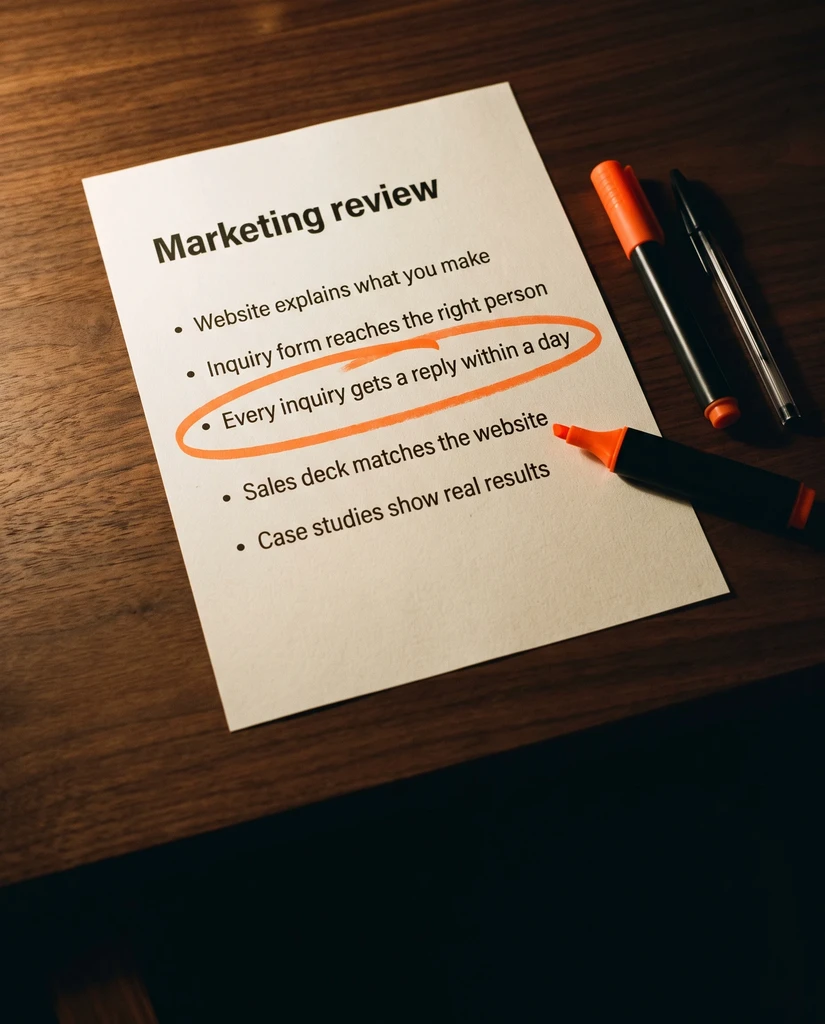
An ad click that waits a day for a call is mostly wasted. Pair the campaign with the seven-touch enquiry follow-up system.
How ads fit the wider plan
Ads work best beside local search and a strong website. For the basics, see how performance marketing works and why businesses in Delhi are switching to performance marketing. The full admissions picture is in how to increase school admissions.
Where Debate Marketers fits
We run admissions campaigns through our performance marketing team, with the landing page and follow-up planned together. Talk to us before your next admission window opens.
How we made this guide
This guide was drafted with AI assistance on 19 November 2026. The budget example uses illustrative figures, not client results.
Questions people ask
They can, because parents search with clear intent, such as admission for a class in an area. Results depend on the landing page, follow-up speed and how tightly the campaign targets your catchment.
Work backwards from seats to fill. Estimate the enquiries needed per admission, then the cost per enquiry you can afford. Start small, measure for a few weeks, then adjust.
Admission-intent phrases that combine a class or board with your area, for example “nursery admission in Dwarka” or “CBSE school near me”. Avoid broad terms like “education”.
A few weeks before your admission window opens, so parents who research early find you, and keep ads running until seats are filled.
We plan and run admissions campaigns, websites, SEO and AI search, ads and CRM follow-up for schools, manufacturers and growing brands, from teams in New Delhi and Malta.
Published 19 November 2026.
More articles

D2C Marketing Strategy in India: A Stage-by-Stage Plan
A D2C marketing strategy for India in four stages, from the first 100 orders to new channels, with what to do, what to measure and what to ignore at each.

School Website Checklist: 15 Things Parents Look For
A school website checklist built around what parents look for before they enquire: fees, admission steps, safety, teachers, transport and a form that works.

Google Business Profile Checklist for Retail Stores
A Google Business Profile checklist for retail stores: name, category, hours, products, photos and reviews, plus a monthly routine to keep it accurate.
- Journal
- Schools & Admissions
Google Ads for School Admissions: A Practical Setup
Set up Google Ads for school admissions: campaign structure, keywords, negatives, radius, landing page and tracking, with a budget set from seats to fill.
The short answer
Run Google Search ads for admissions on a small set of high-intent keywords, limited to your catchment area, pointing to an admissions landing page with a short form and call tracking.
Key points
- Start with Search before Display, video or Performance Max.
- Add negative keywords for jobs, results, holidays and free resources.
- Judge the campaign on visits and admissions, not clicks or form fills.
A parent who types nursery admission in Dwarka into Google has already decided to act. Search ads let a school appear at that moment, which is why they often suit admissions better than social media does. They also waste money quickly when the setup is loose.
Do Google Ads work for school admissions?
They can, because the intent is clear. What decides the result is how tightly the campaign matches your catchment, what the parent sees after the click, and how fast the school follows up. Ads bring enquiries. Visits and admissions depend on everything after that.
Start with one Search campaign
Begin with Search only. Display, video and Performance Max can come later, once you know which searches bring real enquiries. Build three ad groups.
Admission intent: nursery admission, class 1 admission or school admission, plus your area.
Board and type: CBSE school, ICSE school, preschool or day boarding, plus your area or near me.
Your school’s own name, so a competitor’s ad does not sit above you when parents search for you.
Use phrase and exact match to begin with, and write ads that name the classes open, the area and one concrete reason to visit.
Keep the radius honest
Target the area families actually travel from, usually a few kilometres or the localities on your bus routes, and choose the location option for people in or regularly in that area. A wider radius brings cheaper clicks from families who will never enrol.
Add negative keywords from day one
Block the searches you do not want to pay for: jobs and vacancies, results and syllabus, holiday lists, free worksheets and college courses. Review the search terms report every week for the first month and add more.
Send clicks to an admissions page, not the home page
The landing page should repeat the promise in the ad and show the classes open, fees or a fee range, a few real photos and a five-field enquiry form, with a phone number that is answered. Our school website checklist lists what parents look for, and this guide to a landing page brief shows how to plan the page.
Track enquiries, then visits
Set up conversion tracking for form submissions and calls before you spend. Then record in a sheet or CRM which enquiries became visits and admissions, and use that to decide which keywords keep their budget. Optimising for form fills alone invites low-quality leads, which is why it helps to define a qualified lead first. Be equally careful with automation: our piece on automated ad products explains what to check before handing over control.
Set the budget from seats, not from habit
Work backwards. If you need 40 admissions and roughly one enquiry in ten enrols, you need about 400 enquiries across all sources. Decide what share should come from ads, and what an enquiry is worth given a year’s fees and how long families stay. These figures are illustrative, so replace them with your own after the first few weeks.
Follow up within minutes
An ad click that waits a day for a call is mostly wasted. Pair the campaign with the seven-touch enquiry follow-up system.
How ads fit the wider plan
Ads work best beside local search and a strong website. For the basics, see how performance marketing works and why businesses in Delhi are switching to performance marketing. The full admissions picture is in how to increase school admissions.
Where Debate Marketers fits
We run admissions campaigns through our performance marketing team, with the landing page and follow-up planned together. Talk to us before your next admission window opens.
How we made this guide
This guide was drafted with AI assistance on 19 November 2026. The budget example uses illustrative figures, not client results.
Questions people ask
They can, because parents search with clear intent, such as admission for a class in an area. Results depend on the landing page, follow-up speed and how tightly the campaign targets your catchment.
Work backwards from seats to fill. Estimate the enquiries needed per admission, then the cost per enquiry you can afford. Start small, measure for a few weeks, then adjust.
Admission-intent phrases that combine a class or board with your area, for example “nursery admission in Dwarka” or “CBSE school near me”. Avoid broad terms like “education”.
A few weeks before your admission window opens, so parents who research early find you, and keep ads running until seats are filled.
We plan and run admissions campaigns, websites, SEO and AI search, ads and CRM follow-up for schools, manufacturers and growing brands, from teams in New Delhi and Malta.
Published 19 November 2026.
More articles
D2C Marketing Strategy in India: A Stage-by-Stage Plan
A D2C marketing strategy for India in four stages, from the first 100 orders to new channels, with what to do, what to measure and what to ignore at each.
School Website Checklist: 15 Things Parents Look For
A school website checklist built around what parents look for before they enquire: fees, admission steps, safety, teachers, transport and a form that works.
Google Business Profile Checklist for Retail Stores
A Google Business Profile checklist for retail stores: name, category, hours, products, photos and reviews, plus a monthly routine to keep it accurate.
Bring your first priority.
Bring one problem: a brand that's drifted, a website that doesn't sell or enquiries going nowhere. We'll spend 30 minutes finding the first fix.
Projects & shared-team retainers
Bring your first priority.
Bring one problem: a brand that's drifted, a website that doesn't sell or enquiries going nowhere. We'll spend 30 minutes finding the first fix.
Projects & shared-team retainers