Marketers
A shared team for strategy, copy, design and campaigns, every month.
Website developmentCapability pages, useful proof and a direct path to an enquiry.
BrandingPositioning, identity and sales material that explain why you're worth choosing.
SEO and AI searchGet found on Google and in AI answers by the people who buy what you make.
Performance marketingGoogle, LinkedIn and Meta ads measured on qualified enquiries.
AI automation & CRMEvery enquiry gets an owner and a next step, with human review.
 Two minutes, no email neededFind the one thing to fix firstTake the quiz→
- Journal
- Schools & Admissions
How to Increase School Admissions: A 16-Week Plan for 2027–28
A week-by-week plan to fill seats for 2027–28: reply to enquiries faster, fix your admissions page, collect recent reviews, run better visits and follow up.

The short answer
To increase school admissions, start 16 weeks before admissions open and fix conversion before you buy more enquiries: reply to every enquiry within minutes, answer fees, dates and transport on one admissions page, collect recent reviews, make visits easy to book and follow up with each family until they decide.
Key points
- Word of mouth and school visits shape most decisions, and 92% of parents also check the school website (ISQ, 2025).
- Firms that replied to a new lead within an hour were nearly seven times as likely to qualify it (Harvard Business Review, 2011).
- 74% of consumers only care about reviews from the last three months, so ask for reviews every month (BrightLocal, 2026).
- Track four numbers every week: enquiries, visits, applications and admissions.
Admissions season rewards the schools that are easiest to choose. Not always the biggest, or the ones with the largest advertising budget, but the ones that reply quickly, show proof parents trust and make the next step obvious.
This plan is for school owners, principals and admissions teams preparing for the 2027–28 intake. It works whether your session starts in April or September: count back 16 weeks from the day your admissions open, and start at week 1. If your admissions are already open, do weeks 1 and 2 anyway. A faster reply helps the families who are already asking.
What makes parents choose a school?
Parents rarely choose from an advert. They choose from a shortlist built on conversations, visits and research. One of the most detailed recent studies is Independent Schools Queensland’s What Parents Want survey of 3,308 parents, published in August 2025. When parents named the three sources that influenced them most, they listed:
Family, friends and colleagues: 69%
A school open day or visit: 58%
Other parents with children at the school: 51%
The school’s website and social media: 40%
The website matters more than that 40% suggests. In the same study, 92% of parents visited a school website, and 79% of them visited two or more. Parents also start early: two in three began researching at least two years before their child started school.
Two newer habits sit on top of this. Parents read reviews: 97% of consumers read reviews for local businesses, according to BrightLocal’s 2026 survey. And they ask AI assistants. In EAB’s 2026 survey of more than 2,500 parents of high school students, 57% had used AI tools such as ChatGPT to evaluate colleges, and 34% said AI helped them discover schools they had not considered.
So your marketing has four jobs: get onto the shortlist, make the visit easy and memorable, give current parents something to talk about, and reply faster than the school down the road.
How many enquiries do you need to fill your seats?
Start with the seats, not the advertising budget. Work backwards through your admissions funnel using last year’s conversion rates. If you don’t have them, use the example below and replace it with your own numbers after four weeks.
Stage | Example conversion rate | Families needed for 60 seats |
|---|---|---|
Admissions | Your target | 60 |
Applications | 3 in 4 applications become admissions | 80 |
Visits | 1 in 2 visiting families apply | 160 |
Enquiries | 2 in 5 enquiries book a visit | 400 |
These rates are an illustration, not a benchmark. The point is what happens when one rate improves. If half of your visiting families apply today and you lift that to 60%, you need about 335 enquiries instead of 400 for the same 60 seats. That is 65 fewer enquiries to pay for, and the improvement usually comes from better follow-up, not bigger ads.
The 16-week admissions plan at a glance
Weeks | Focus | Finished when |
|---|---|---|
1–2 | Enquiry path | Every enquiry lands in one list with an owner, and the first reply goes out within 15 minutes in school hours |
3–4 | Admissions page and Google profile | Fees, dates, age criteria, process and transport are answered on one page, and your Google Business Profile is complete |
5–6 | Reviews, stories and referrals | Fresh reviews are coming in, five parent stories are recorded with consent, and every current parent has an invitation to forward |
7–10 | Visits and open days | Families can book a visit online, get reminders and leave with one clear next step |
11–14 | Follow-up and applications | Every visiting family hears from you on days 0, 1, 3, 7 and 14, and every family that says no has a recorded reason |
15–16 | Close and learn | Seats are confirmed in writing, waitlisted families know where they stand, and next year’s targets come from real numbers |
Weeks 1–2: Fix the enquiry path before you spend on ads
Many schools lose families before any marketing problem begins. A parent fills in a form on Friday evening, calls on Saturday and hears back on Tuesday. By then they have visited two other schools.
List every way a parent can reach you: phone, WhatsApp, website forms, walk-ins, Instagram and Facebook messages, Google Business Profile calls and listing sites. Then route all of them into one list. A CRM is best, but a shared sheet with these columns is a good start:
Parent and child name, and the grade applied for
Source (how they found you) and channel (how they contacted you)
Date and time received, and the time of the first reply
Owner, next step and status
Set one rule for speed: the first reply goes out within 15 minutes in school hours, and the same evening otherwise. Speed is the cheapest admissions lever you have. In a widely cited Harvard Business Review audit of 2,241 US companies, firms that contacted a new lead within an hour were nearly seven times as likely to qualify it as firms that waited longer, and more than 60 times as likely as firms that waited a day or more. Only 37% replied within an hour, and 23% never replied at all.
Education is not immune. Edified’s 2025 mystery-shopping study of 103 higher-education institutions found that only one in four prospective students received any follow-up after their first enquiry, and fewer than one in ten phone enquirers heard back after the call. WhatsApp performed best: every student who used it got an answer, and 80% of those answers arrived within two business hours.
Before week 2 ends, mystery-shop your own school. Ask a friend to enquire by phone, WhatsApp and the website form, and time each reply.
Template: first reply to a new enquiry
Hello [Parent name], thank you for your interest in [School name] for [Child name]. I’m [Your name] from the admissions team. Admissions for [Grade] in 2027–28 open on [date]. Would you like to visit? We have tours on [day] at [time] and [day] at [time], or you can pick a time here: [link]. I can also send the fee structure and transport routes now if that helps.
Weeks 3–4: Make your admissions page and Google profile answer parents’ questions
Parents compare schools on their phones, often late at night. If your website makes them call to find out the fees or the age criteria, many will move on to a school that answers.
Build one admissions page that answers, in plain words:
Fees, or at least a fee range and what it includes
Admission dates, age criteria and the documents needed
The process from enquiry to confirmed seat, step by step
Transport routes and timings, and school hours
Curriculum or board, class sizes and what makes your teaching different
Results, outcomes and achievements, with dates
A “Book a visit” button that works on a phone
Use real photos of your classrooms, labs, grounds and events. In the ISQ study, 73% of parents said the school’s look and facilities were highly or totally influential, and stock photos hide exactly what parents are trying to judge. If your website can’t do this easily, it is worth fixing before the season starts. Our website team builds school sites that your own staff can update.
Then complete your Google Business Profile: the right category, opening hours, a link to the admissions page, real photos and a post with this season’s admission dates. Keep the same name, address, phone number and description on your website, social profiles and education directories.
This consistency also matters in AI search. When a parent asks ChatGPT or Google’s AI Mode for “the best CBSE schools near Dwarka with transport”, the answer is built from pages the assistant can find and trust: your website, your Google profile, listings, reviews and local news. Our guide on how to get your business recommended by ChatGPT explains how those answers are chosen.
Weeks 5–6: Collect reviews, parent stories and referrals
Word of mouth is the strongest channel in every survey, so give it fuel.
Reviews. Ask every month, not once a year. BrightLocal’s 2026 survey found that 74% of consumers only care about reviews written in the last three months, 68% will only use a business rated four stars or higher, and 89% expect owners to reply to reviews. Ask after good moments, such as the first week of term, annual day or results day, and send a direct link to your Google review form. Reply to every review, including the critical ones, calmly and specifically.
Stay inside Google’s rules. Its policy prohibits offering incentives for reviews, setting review quotas for staff, and discouraging negative reviews or asking only happy parents. Ask everyone.
Template: review request
Hello [Parent name], we hope [Child name] is enjoying [this term]. Many families choose a school based on other parents’ experiences. If you have a minute, would you share yours on Google? [link] Thank you, every review is read by our principal.
Parent stories. Record five short stories with parents who joined in the last two years: why they chose you, and what changed for their child. A 60-second phone video is enough. Get written consent before you publish any child’s name, photo or voice, and keep the consent on file.
Referrals. Give every current parent a ready-to-forward invitation to your open day. If you offer a referral benefit, keep it modest and say so openly.
Template: invitation for current parents to forward
Hello! [School name] is opening its doors for 2027–28 admissions on [date]. If friends or neighbours are looking for a school for [grades], they’re welcome to visit. They can book a tour here: [link]. Thank you for recommending us.
Weeks 7–10: Run visits and open days families remember
The visit is where most decisions are made. In the ISQ study, 92% of parents attended a one-on-one visit or an open day, and one-on-one visits were rated the most useful source of information, ahead of open days and websites.
Offer more than one way to visit: small-group tours on weekdays, an open morning at the weekend, and a short video tour for families who live further away. Let parents book a time slot online, then send reminders 24 hours and 2 hours before, with the location pin, parking details and the name of the person who will meet them.
On the day, every family should:
Be greeted by name by the person they will deal with
See a real class in the grade they are applying for
Meet a teacher and, if possible, a current parent
Leave with the fee structure, the key dates and one clear next step
This is also when paid ads earn their place. Use search ads for high-intent searches such as “CBSE school near [area]” or “IB school in [city]”, and social ads to promote the open day to families within commuting distance. Send every ad to the visit booking page, never to the home page, and judge campaigns on visits booked and admissions, not clicks. Our performance marketing team reports on exactly those numbers.
Weeks 11–14: Follow up until every family decides
Families rarely decide on the day of the visit. They compare, talk it over and wait for a nudge. A simple sequence keeps you in the conversation without pressure:
Day 0: thank them for visiting and answer any question you couldn’t answer on the day.
Day 1: send the application link, the document checklist and the fee structure.
Day 3: share one parent story that matches their concern, such as fees, sport, results or learning support.
Day 7: a phone call from the head of admissions.
Day 14: a reminder of the application deadline, only if the deadline is real.
Template: after the visit
Thank you for visiting [School name] today, [Parent name]. It was lovely to meet [Child name]. As promised, [answer to their question]. When you’re ready, the application takes about 10 minutes: [link]. If anything is holding you back, reply here and I’ll help.
When a family says no, record why: fees, distance, timings, curriculum or another school. After a month, these reasons will tell you more than any survey.
If enquiries arrive faster than your team can answer them, automation and a CRM can handle reminders and routing, as long as a person approves every message that reaches parents.
Weeks 15–16: Close the season and learn from it
Confirm seats in writing and send a welcome pack with first-week details.
Tell waitlisted families where they stand and when you will update them.
Compare every number with your targets, and work out the cost per admission for each paid channel.
Ask new parents why they chose you. Their answers are next year’s messaging.
Retention is admissions too. Every family that re-enrols is a seat you don’t have to fill, and a parent who speaks well of you at the school gate.
What should a school track every week?
Number | How to count it | Why it matters |
|---|---|---|
Enquiries by source | All channels in one list | Shows where families find you |
First-reply time | Median minutes from enquiry to the first human reply | Speed predicts conversion |
Enquiry to visit | Visits booked ÷ enquiries | Tests your replies and booking path |
Visit to application | Applications ÷ visits attended | Tests the visit and the follow-up |
Application to admission | Admissions ÷ applications | Tests fees, process and offers |
Cost per admission | Ad spend ÷ admissions from that channel | Shows where more budget will pay back |
Recent reviews | Reviews in the last 90 days, and the average rating | Parents trust recent reviews |
Common mistakes that cost admissions
Buying ads before fixing reply speed and follow-up
Sending ads to the home page instead of a booking page
Hiding fees, dates or age criteria
Holding one open day with no follow-up
Using stock photos instead of your own campus
Asking for reviews once a year
Where to start this week
If you only do three things this week: put every enquiry into one list with an owner, set the 15-minute reply rule, and mystery-shop your own school. If you’d like a second opinion on your admissions plan, book a 30-minute call with our team.
Sources
Independent Schools Queensland, What Parents Want 2025: key findings, August 2025
BrightLocal, Local Consumer Review Survey 2026, February 2026
EAB, More than half of parents use AI to research colleges, August 2026
James B. Oldroyd, Kristina McElheran and David Elkington, The Short Life of Online Sales Leads, Harvard Business Review, March 2011
ICEF Monitor, Mystery shopping study finds broad improvement in student enquiry handling, October 2025
Google, Maps user-contributed content policy: prohibited and restricted content
Questions people ask
Start at least 16 weeks before admissions open, so you have time to fix enquiry handling, your admissions page and your reviews before visits begin. Keep your website and reviews current all year, because many parents start researching two years or more ahead.
Convert more of the enquiries you already get. Reply within minutes, make visits easy to book and follow up after every visit. Improving these steps usually costs less than buying more enquiries.
Set a target cost per admission first. Then test a small budget for four weeks, measure the cost per visit and per admission for each channel, and increase spend only on the channels that produce visits and applications.
They work best when they promote one clear next step, such as an open day or a visit booking, to families within commuting distance, and when every enquiry gets a fast reply. On their own, they rarely fill seats.
Ask every family, every month, after good moments, and send a direct link to your review form. Reply to every review. Do not offer rewards or ask only happy parents, because Google’s policy prohibits both.
Yes, if you can. Publishing fees, or at least a range and what it includes, filters out families who cannot afford the school and builds trust with those who can. It also gives AI assistants a reliable fact to quote.
More and more. In EAB’s 2026 survey, 57% of parents of high school students had used AI tools to evaluate colleges, and 34% found new options that way. Keep your fees, dates, results and reviews consistent online so AI answers describe your school correctly.
We plan and run admissions campaigns, websites, SEO and AI search, ads and CRM follow-up for schools, manufacturers and growing brands, from teams in New Delhi and Malta.
Published 12 October 2026.
More articles

How to Get Your Business Recommended by ChatGPT and AI Search
How ChatGPT, Gemini and Google’s AI answers choose which businesses to recommend, with a 10-step checklist, crawler settings and a 30-day plan.
Website Development Quotation: How to Compare First-Year Cost and Ownership
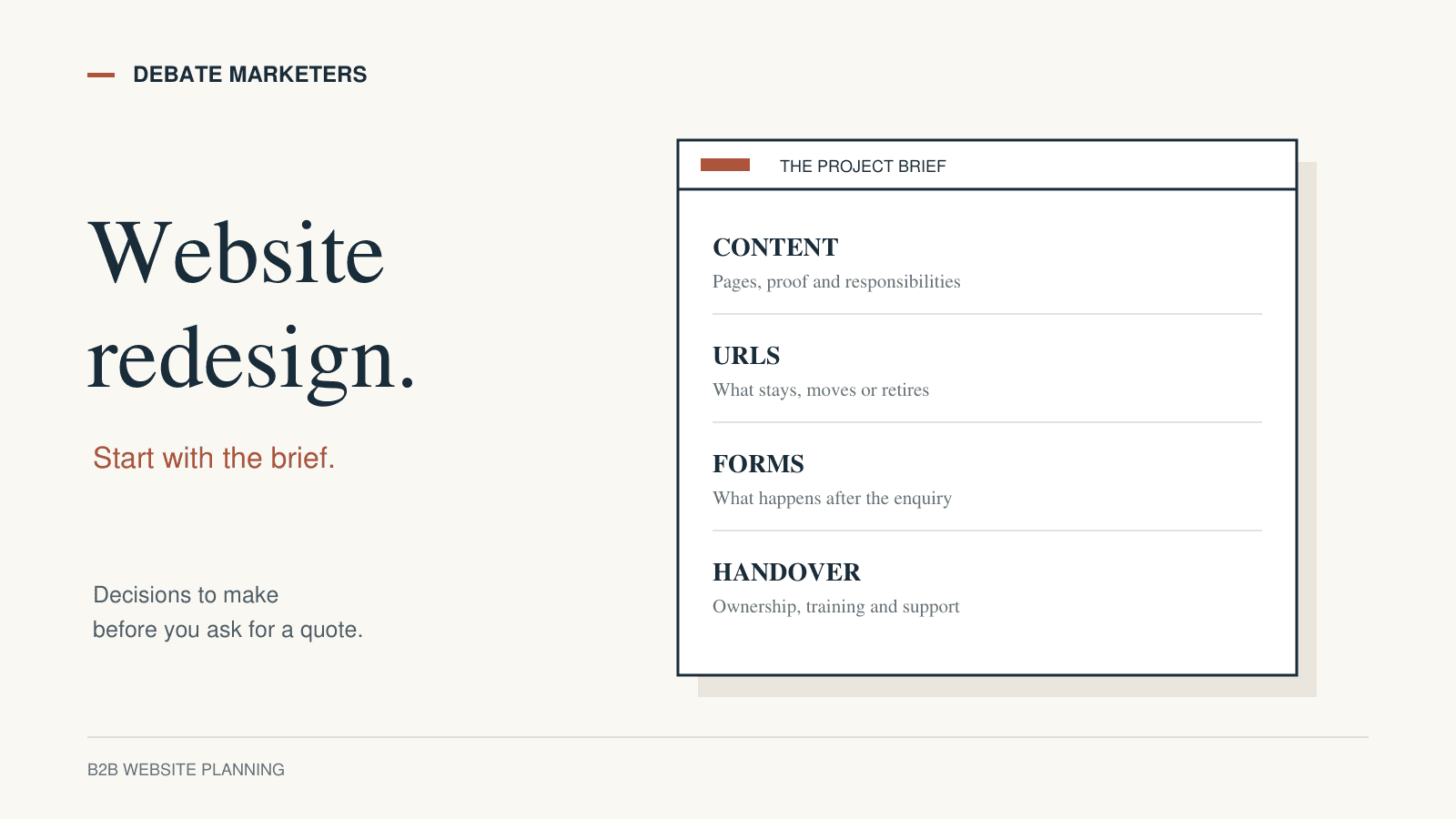
Compare website development quotations in India using a first-year cost worksheet covering the build, hosting, licences, content, support and handover.

Social Media Agency Proposal: What a Monthly Retainer Should Actually Include
Compare social media agency proposals by production, approvals, community replies, reporting and ownership. Use the scope card before choosing a retainer.
- Journal
- Schools & Admissions
How to Increase School Admissions: A 16-Week Plan for 2027–28
A week-by-week plan to fill seats for 2027–28: reply to enquiries faster, fix your admissions page, collect recent reviews, run better visits and follow up.
The short answer
To increase school admissions, start 16 weeks before admissions open and fix conversion before you buy more enquiries: reply to every enquiry within minutes, answer fees, dates and transport on one admissions page, collect recent reviews, make visits easy to book and follow up with each family until they decide.
Key points
- Word of mouth and school visits shape most decisions, and 92% of parents also check the school website (ISQ, 2025).
- Firms that replied to a new lead within an hour were nearly seven times as likely to qualify it (Harvard Business Review, 2011).
- 74% of consumers only care about reviews from the last three months, so ask for reviews every month (BrightLocal, 2026).
- Track four numbers every week: enquiries, visits, applications and admissions.
Admissions season rewards the schools that are easiest to choose. Not always the biggest, or the ones with the largest advertising budget, but the ones that reply quickly, show proof parents trust and make the next step obvious.
This plan is for school owners, principals and admissions teams preparing for the 2027–28 intake. It works whether your session starts in April or September: count back 16 weeks from the day your admissions open, and start at week 1. If your admissions are already open, do weeks 1 and 2 anyway. A faster reply helps the families who are already asking.
What makes parents choose a school?
Parents rarely choose from an advert. They choose from a shortlist built on conversations, visits and research. One of the most detailed recent studies is Independent Schools Queensland’s What Parents Want survey of 3,308 parents, published in August 2025. When parents named the three sources that influenced them most, they listed:
Family, friends and colleagues: 69%
A school open day or visit: 58%
Other parents with children at the school: 51%
The school’s website and social media: 40%
The website matters more than that 40% suggests. In the same study, 92% of parents visited a school website, and 79% of them visited two or more. Parents also start early: two in three began researching at least two years before their child started school.
Two newer habits sit on top of this. Parents read reviews: 97% of consumers read reviews for local businesses, according to BrightLocal’s 2026 survey. And they ask AI assistants. In EAB’s 2026 survey of more than 2,500 parents of high school students, 57% had used AI tools such as ChatGPT to evaluate colleges, and 34% said AI helped them discover schools they had not considered.
So your marketing has four jobs: get onto the shortlist, make the visit easy and memorable, give current parents something to talk about, and reply faster than the school down the road.
How many enquiries do you need to fill your seats?
Start with the seats, not the advertising budget. Work backwards through your admissions funnel using last year’s conversion rates. If you don’t have them, use the example below and replace it with your own numbers after four weeks.
Stage | Example conversion rate | Families needed for 60 seats |
|---|---|---|
Admissions | Your target | 60 |
Applications | 3 in 4 applications become admissions | 80 |
Visits | 1 in 2 visiting families apply | 160 |
Enquiries | 2 in 5 enquiries book a visit | 400 |
These rates are an illustration, not a benchmark. The point is what happens when one rate improves. If half of your visiting families apply today and you lift that to 60%, you need about 335 enquiries instead of 400 for the same 60 seats. That is 65 fewer enquiries to pay for, and the improvement usually comes from better follow-up, not bigger ads.
The 16-week admissions plan at a glance
Weeks | Focus | Finished when |
|---|---|---|
1–2 | Enquiry path | Every enquiry lands in one list with an owner, and the first reply goes out within 15 minutes in school hours |
3–4 | Admissions page and Google profile | Fees, dates, age criteria, process and transport are answered on one page, and your Google Business Profile is complete |
5–6 | Reviews, stories and referrals | Fresh reviews are coming in, five parent stories are recorded with consent, and every current parent has an invitation to forward |
7–10 | Visits and open days | Families can book a visit online, get reminders and leave with one clear next step |
11–14 | Follow-up and applications | Every visiting family hears from you on days 0, 1, 3, 7 and 14, and every family that says no has a recorded reason |
15–16 | Close and learn | Seats are confirmed in writing, waitlisted families know where they stand, and next year’s targets come from real numbers |
Weeks 1–2: Fix the enquiry path before you spend on ads
Many schools lose families before any marketing problem begins. A parent fills in a form on Friday evening, calls on Saturday and hears back on Tuesday. By then they have visited two other schools.
List every way a parent can reach you: phone, WhatsApp, website forms, walk-ins, Instagram and Facebook messages, Google Business Profile calls and listing sites. Then route all of them into one list. A CRM is best, but a shared sheet with these columns is a good start:
Parent and child name, and the grade applied for
Source (how they found you) and channel (how they contacted you)
Date and time received, and the time of the first reply
Owner, next step and status
Set one rule for speed: the first reply goes out within 15 minutes in school hours, and the same evening otherwise. Speed is the cheapest admissions lever you have. In a widely cited Harvard Business Review audit of 2,241 US companies, firms that contacted a new lead within an hour were nearly seven times as likely to qualify it as firms that waited longer, and more than 60 times as likely as firms that waited a day or more. Only 37% replied within an hour, and 23% never replied at all.
Education is not immune. Edified’s 2025 mystery-shopping study of 103 higher-education institutions found that only one in four prospective students received any follow-up after their first enquiry, and fewer than one in ten phone enquirers heard back after the call. WhatsApp performed best: every student who used it got an answer, and 80% of those answers arrived within two business hours.
Before week 2 ends, mystery-shop your own school. Ask a friend to enquire by phone, WhatsApp and the website form, and time each reply.
Template: first reply to a new enquiry
Hello [Parent name], thank you for your interest in [School name] for [Child name]. I’m [Your name] from the admissions team. Admissions for [Grade] in 2027–28 open on [date]. Would you like to visit? We have tours on [day] at [time] and [day] at [time], or you can pick a time here: [link]. I can also send the fee structure and transport routes now if that helps.
Weeks 3–4: Make your admissions page and Google profile answer parents’ questions
Parents compare schools on their phones, often late at night. If your website makes them call to find out the fees or the age criteria, many will move on to a school that answers.
Build one admissions page that answers, in plain words:
Fees, or at least a fee range and what it includes
Admission dates, age criteria and the documents needed
The process from enquiry to confirmed seat, step by step
Transport routes and timings, and school hours
Curriculum or board, class sizes and what makes your teaching different
Results, outcomes and achievements, with dates
A “Book a visit” button that works on a phone
Use real photos of your classrooms, labs, grounds and events. In the ISQ study, 73% of parents said the school’s look and facilities were highly or totally influential, and stock photos hide exactly what parents are trying to judge. If your website can’t do this easily, it is worth fixing before the season starts. Our website team builds school sites that your own staff can update.
Then complete your Google Business Profile: the right category, opening hours, a link to the admissions page, real photos and a post with this season’s admission dates. Keep the same name, address, phone number and description on your website, social profiles and education directories.
This consistency also matters in AI search. When a parent asks ChatGPT or Google’s AI Mode for “the best CBSE schools near Dwarka with transport”, the answer is built from pages the assistant can find and trust: your website, your Google profile, listings, reviews and local news. Our guide on how to get your business recommended by ChatGPT explains how those answers are chosen.
Weeks 5–6: Collect reviews, parent stories and referrals
Word of mouth is the strongest channel in every survey, so give it fuel.
Reviews. Ask every month, not once a year. BrightLocal’s 2026 survey found that 74% of consumers only care about reviews written in the last three months, 68% will only use a business rated four stars or higher, and 89% expect owners to reply to reviews. Ask after good moments, such as the first week of term, annual day or results day, and send a direct link to your Google review form. Reply to every review, including the critical ones, calmly and specifically.
Stay inside Google’s rules. Its policy prohibits offering incentives for reviews, setting review quotas for staff, and discouraging negative reviews or asking only happy parents. Ask everyone.
Template: review request
Hello [Parent name], we hope [Child name] is enjoying [this term]. Many families choose a school based on other parents’ experiences. If you have a minute, would you share yours on Google? [link] Thank you, every review is read by our principal.
Parent stories. Record five short stories with parents who joined in the last two years: why they chose you, and what changed for their child. A 60-second phone video is enough. Get written consent before you publish any child’s name, photo or voice, and keep the consent on file.
Referrals. Give every current parent a ready-to-forward invitation to your open day. If you offer a referral benefit, keep it modest and say so openly.
Template: invitation for current parents to forward
Hello! [School name] is opening its doors for 2027–28 admissions on [date]. If friends or neighbours are looking for a school for [grades], they’re welcome to visit. They can book a tour here: [link]. Thank you for recommending us.
Weeks 7–10: Run visits and open days families remember
The visit is where most decisions are made. In the ISQ study, 92% of parents attended a one-on-one visit or an open day, and one-on-one visits were rated the most useful source of information, ahead of open days and websites.
Offer more than one way to visit: small-group tours on weekdays, an open morning at the weekend, and a short video tour for families who live further away. Let parents book a time slot online, then send reminders 24 hours and 2 hours before, with the location pin, parking details and the name of the person who will meet them.
On the day, every family should:
Be greeted by name by the person they will deal with
See a real class in the grade they are applying for
Meet a teacher and, if possible, a current parent
Leave with the fee structure, the key dates and one clear next step
This is also when paid ads earn their place. Use search ads for high-intent searches such as “CBSE school near [area]” or “IB school in [city]”, and social ads to promote the open day to families within commuting distance. Send every ad to the visit booking page, never to the home page, and judge campaigns on visits booked and admissions, not clicks. Our performance marketing team reports on exactly those numbers.
Weeks 11–14: Follow up until every family decides
Families rarely decide on the day of the visit. They compare, talk it over and wait for a nudge. A simple sequence keeps you in the conversation without pressure:
Day 0: thank them for visiting and answer any question you couldn’t answer on the day.
Day 1: send the application link, the document checklist and the fee structure.
Day 3: share one parent story that matches their concern, such as fees, sport, results or learning support.
Day 7: a phone call from the head of admissions.
Day 14: a reminder of the application deadline, only if the deadline is real.
Template: after the visit
Thank you for visiting [School name] today, [Parent name]. It was lovely to meet [Child name]. As promised, [answer to their question]. When you’re ready, the application takes about 10 minutes: [link]. If anything is holding you back, reply here and I’ll help.
When a family says no, record why: fees, distance, timings, curriculum or another school. After a month, these reasons will tell you more than any survey.
If enquiries arrive faster than your team can answer them, automation and a CRM can handle reminders and routing, as long as a person approves every message that reaches parents.
Weeks 15–16: Close the season and learn from it
Confirm seats in writing and send a welcome pack with first-week details.
Tell waitlisted families where they stand and when you will update them.
Compare every number with your targets, and work out the cost per admission for each paid channel.
Ask new parents why they chose you. Their answers are next year’s messaging.
Retention is admissions too. Every family that re-enrols is a seat you don’t have to fill, and a parent who speaks well of you at the school gate.
What should a school track every week?
Number | How to count it | Why it matters |
|---|---|---|
Enquiries by source | All channels in one list | Shows where families find you |
First-reply time | Median minutes from enquiry to the first human reply | Speed predicts conversion |
Enquiry to visit | Visits booked ÷ enquiries | Tests your replies and booking path |
Visit to application | Applications ÷ visits attended | Tests the visit and the follow-up |
Application to admission | Admissions ÷ applications | Tests fees, process and offers |
Cost per admission | Ad spend ÷ admissions from that channel | Shows where more budget will pay back |
Recent reviews | Reviews in the last 90 days, and the average rating | Parents trust recent reviews |
Common mistakes that cost admissions
Buying ads before fixing reply speed and follow-up
Sending ads to the home page instead of a booking page
Hiding fees, dates or age criteria
Holding one open day with no follow-up
Using stock photos instead of your own campus
Asking for reviews once a year
Where to start this week
If you only do three things this week: put every enquiry into one list with an owner, set the 15-minute reply rule, and mystery-shop your own school. If you’d like a second opinion on your admissions plan, book a 30-minute call with our team.
Sources
Independent Schools Queensland, What Parents Want 2025: key findings, August 2025
BrightLocal, Local Consumer Review Survey 2026, February 2026
EAB, More than half of parents use AI to research colleges, August 2026
James B. Oldroyd, Kristina McElheran and David Elkington, The Short Life of Online Sales Leads, Harvard Business Review, March 2011
ICEF Monitor, Mystery shopping study finds broad improvement in student enquiry handling, October 2025
Google, Maps user-contributed content policy: prohibited and restricted content
Questions people ask
Start at least 16 weeks before admissions open, so you have time to fix enquiry handling, your admissions page and your reviews before visits begin. Keep your website and reviews current all year, because many parents start researching two years or more ahead.
Convert more of the enquiries you already get. Reply within minutes, make visits easy to book and follow up after every visit. Improving these steps usually costs less than buying more enquiries.
Set a target cost per admission first. Then test a small budget for four weeks, measure the cost per visit and per admission for each channel, and increase spend only on the channels that produce visits and applications.
They work best when they promote one clear next step, such as an open day or a visit booking, to families within commuting distance, and when every enquiry gets a fast reply. On their own, they rarely fill seats.
Ask every family, every month, after good moments, and send a direct link to your review form. Reply to every review. Do not offer rewards or ask only happy parents, because Google’s policy prohibits both.
Yes, if you can. Publishing fees, or at least a range and what it includes, filters out families who cannot afford the school and builds trust with those who can. It also gives AI assistants a reliable fact to quote.
More and more. In EAB’s 2026 survey, 57% of parents of high school students had used AI tools to evaluate colleges, and 34% found new options that way. Keep your fees, dates, results and reviews consistent online so AI answers describe your school correctly.
We plan and run admissions campaigns, websites, SEO and AI search, ads and CRM follow-up for schools, manufacturers and growing brands, from teams in New Delhi and Malta.
Published 12 October 2026.
More articles
How to Get Your Business Recommended by ChatGPT and AI Search
How ChatGPT, Gemini and Google’s AI answers choose which businesses to recommend, with a 10-step checklist, crawler settings and a 30-day plan.
Website Development Quotation: How to Compare First-Year Cost and Ownership
Compare website development quotations in India using a first-year cost worksheet covering the build, hosting, licences, content, support and handover.
Social Media Agency Proposal: What a Monthly Retainer Should Actually Include
Compare social media agency proposals by production, approvals, community replies, reporting and ownership. Use the scope card before choosing a retainer.
- Journal
- Schools & Admissions
How to Increase School Admissions: A 16-Week Plan for 2027–28
A week-by-week plan to fill seats for 2027–28: reply to enquiries faster, fix your admissions page, collect recent reviews, run better visits and follow up.
The short answer
To increase school admissions, start 16 weeks before admissions open and fix conversion before you buy more enquiries: reply to every enquiry within minutes, answer fees, dates and transport on one admissions page, collect recent reviews, make visits easy to book and follow up with each family until they decide.
Key points
- Word of mouth and school visits shape most decisions, and 92% of parents also check the school website (ISQ, 2025).
- Firms that replied to a new lead within an hour were nearly seven times as likely to qualify it (Harvard Business Review, 2011).
- 74% of consumers only care about reviews from the last three months, so ask for reviews every month (BrightLocal, 2026).
- Track four numbers every week: enquiries, visits, applications and admissions.
Admissions season rewards the schools that are easiest to choose. Not always the biggest, or the ones with the largest advertising budget, but the ones that reply quickly, show proof parents trust and make the next step obvious.
This plan is for school owners, principals and admissions teams preparing for the 2027–28 intake. It works whether your session starts in April or September: count back 16 weeks from the day your admissions open, and start at week 1. If your admissions are already open, do weeks 1 and 2 anyway. A faster reply helps the families who are already asking.
What makes parents choose a school?
Parents rarely choose from an advert. They choose from a shortlist built on conversations, visits and research. One of the most detailed recent studies is Independent Schools Queensland’s What Parents Want survey of 3,308 parents, published in August 2025. When parents named the three sources that influenced them most, they listed:
Family, friends and colleagues: 69%
A school open day or visit: 58%
Other parents with children at the school: 51%
The school’s website and social media: 40%
The website matters more than that 40% suggests. In the same study, 92% of parents visited a school website, and 79% of them visited two or more. Parents also start early: two in three began researching at least two years before their child started school.
Two newer habits sit on top of this. Parents read reviews: 97% of consumers read reviews for local businesses, according to BrightLocal’s 2026 survey. And they ask AI assistants. In EAB’s 2026 survey of more than 2,500 parents of high school students, 57% had used AI tools such as ChatGPT to evaluate colleges, and 34% said AI helped them discover schools they had not considered.
So your marketing has four jobs: get onto the shortlist, make the visit easy and memorable, give current parents something to talk about, and reply faster than the school down the road.
How many enquiries do you need to fill your seats?
Start with the seats, not the advertising budget. Work backwards through your admissions funnel using last year’s conversion rates. If you don’t have them, use the example below and replace it with your own numbers after four weeks.
Stage | Example conversion rate | Families needed for 60 seats |
|---|---|---|
Admissions | Your target | 60 |
Applications | 3 in 4 applications become admissions | 80 |
Visits | 1 in 2 visiting families apply | 160 |
Enquiries | 2 in 5 enquiries book a visit | 400 |
These rates are an illustration, not a benchmark. The point is what happens when one rate improves. If half of your visiting families apply today and you lift that to 60%, you need about 335 enquiries instead of 400 for the same 60 seats. That is 65 fewer enquiries to pay for, and the improvement usually comes from better follow-up, not bigger ads.
The 16-week admissions plan at a glance
Weeks | Focus | Finished when |
|---|---|---|
1–2 | Enquiry path | Every enquiry lands in one list with an owner, and the first reply goes out within 15 minutes in school hours |
3–4 | Admissions page and Google profile | Fees, dates, age criteria, process and transport are answered on one page, and your Google Business Profile is complete |
5–6 | Reviews, stories and referrals | Fresh reviews are coming in, five parent stories are recorded with consent, and every current parent has an invitation to forward |
7–10 | Visits and open days | Families can book a visit online, get reminders and leave with one clear next step |
11–14 | Follow-up and applications | Every visiting family hears from you on days 0, 1, 3, 7 and 14, and every family that says no has a recorded reason |
15–16 | Close and learn | Seats are confirmed in writing, waitlisted families know where they stand, and next year’s targets come from real numbers |
Weeks 1–2: Fix the enquiry path before you spend on ads
Many schools lose families before any marketing problem begins. A parent fills in a form on Friday evening, calls on Saturday and hears back on Tuesday. By then they have visited two other schools.
List every way a parent can reach you: phone, WhatsApp, website forms, walk-ins, Instagram and Facebook messages, Google Business Profile calls and listing sites. Then route all of them into one list. A CRM is best, but a shared sheet with these columns is a good start:
Parent and child name, and the grade applied for
Source (how they found you) and channel (how they contacted you)
Date and time received, and the time of the first reply
Owner, next step and status
Set one rule for speed: the first reply goes out within 15 minutes in school hours, and the same evening otherwise. Speed is the cheapest admissions lever you have. In a widely cited Harvard Business Review audit of 2,241 US companies, firms that contacted a new lead within an hour were nearly seven times as likely to qualify it as firms that waited longer, and more than 60 times as likely as firms that waited a day or more. Only 37% replied within an hour, and 23% never replied at all.
Education is not immune. Edified’s 2025 mystery-shopping study of 103 higher-education institutions found that only one in four prospective students received any follow-up after their first enquiry, and fewer than one in ten phone enquirers heard back after the call. WhatsApp performed best: every student who used it got an answer, and 80% of those answers arrived within two business hours.
Before week 2 ends, mystery-shop your own school. Ask a friend to enquire by phone, WhatsApp and the website form, and time each reply.
Template: first reply to a new enquiry
Hello [Parent name], thank you for your interest in [School name] for [Child name]. I’m [Your name] from the admissions team. Admissions for [Grade] in 2027–28 open on [date]. Would you like to visit? We have tours on [day] at [time] and [day] at [time], or you can pick a time here: [link]. I can also send the fee structure and transport routes now if that helps.
Weeks 3–4: Make your admissions page and Google profile answer parents’ questions
Parents compare schools on their phones, often late at night. If your website makes them call to find out the fees or the age criteria, many will move on to a school that answers.
Build one admissions page that answers, in plain words:
Fees, or at least a fee range and what it includes
Admission dates, age criteria and the documents needed
The process from enquiry to confirmed seat, step by step
Transport routes and timings, and school hours
Curriculum or board, class sizes and what makes your teaching different
Results, outcomes and achievements, with dates
A “Book a visit” button that works on a phone
Use real photos of your classrooms, labs, grounds and events. In the ISQ study, 73% of parents said the school’s look and facilities were highly or totally influential, and stock photos hide exactly what parents are trying to judge. If your website can’t do this easily, it is worth fixing before the season starts. Our website team builds school sites that your own staff can update.
Then complete your Google Business Profile: the right category, opening hours, a link to the admissions page, real photos and a post with this season’s admission dates. Keep the same name, address, phone number and description on your website, social profiles and education directories.
This consistency also matters in AI search. When a parent asks ChatGPT or Google’s AI Mode for “the best CBSE schools near Dwarka with transport”, the answer is built from pages the assistant can find and trust: your website, your Google profile, listings, reviews and local news. Our guide on how to get your business recommended by ChatGPT explains how those answers are chosen.
Weeks 5–6: Collect reviews, parent stories and referrals
Word of mouth is the strongest channel in every survey, so give it fuel.
Reviews. Ask every month, not once a year. BrightLocal’s 2026 survey found that 74% of consumers only care about reviews written in the last three months, 68% will only use a business rated four stars or higher, and 89% expect owners to reply to reviews. Ask after good moments, such as the first week of term, annual day or results day, and send a direct link to your Google review form. Reply to every review, including the critical ones, calmly and specifically.
Stay inside Google’s rules. Its policy prohibits offering incentives for reviews, setting review quotas for staff, and discouraging negative reviews or asking only happy parents. Ask everyone.
Template: review request
Hello [Parent name], we hope [Child name] is enjoying [this term]. Many families choose a school based on other parents’ experiences. If you have a minute, would you share yours on Google? [link] Thank you, every review is read by our principal.
Parent stories. Record five short stories with parents who joined in the last two years: why they chose you, and what changed for their child. A 60-second phone video is enough. Get written consent before you publish any child’s name, photo or voice, and keep the consent on file.
Referrals. Give every current parent a ready-to-forward invitation to your open day. If you offer a referral benefit, keep it modest and say so openly.
Template: invitation for current parents to forward
Hello! [School name] is opening its doors for 2027–28 admissions on [date]. If friends or neighbours are looking for a school for [grades], they’re welcome to visit. They can book a tour here: [link]. Thank you for recommending us.
Weeks 7–10: Run visits and open days families remember
The visit is where most decisions are made. In the ISQ study, 92% of parents attended a one-on-one visit or an open day, and one-on-one visits were rated the most useful source of information, ahead of open days and websites.
Offer more than one way to visit: small-group tours on weekdays, an open morning at the weekend, and a short video tour for families who live further away. Let parents book a time slot online, then send reminders 24 hours and 2 hours before, with the location pin, parking details and the name of the person who will meet them.
On the day, every family should:
Be greeted by name by the person they will deal with
See a real class in the grade they are applying for
Meet a teacher and, if possible, a current parent
Leave with the fee structure, the key dates and one clear next step
This is also when paid ads earn their place. Use search ads for high-intent searches such as “CBSE school near [area]” or “IB school in [city]”, and social ads to promote the open day to families within commuting distance. Send every ad to the visit booking page, never to the home page, and judge campaigns on visits booked and admissions, not clicks. Our performance marketing team reports on exactly those numbers.
Weeks 11–14: Follow up until every family decides
Families rarely decide on the day of the visit. They compare, talk it over and wait for a nudge. A simple sequence keeps you in the conversation without pressure:
Day 0: thank them for visiting and answer any question you couldn’t answer on the day.
Day 1: send the application link, the document checklist and the fee structure.
Day 3: share one parent story that matches their concern, such as fees, sport, results or learning support.
Day 7: a phone call from the head of admissions.
Day 14: a reminder of the application deadline, only if the deadline is real.
Template: after the visit
Thank you for visiting [School name] today, [Parent name]. It was lovely to meet [Child name]. As promised, [answer to their question]. When you’re ready, the application takes about 10 minutes: [link]. If anything is holding you back, reply here and I’ll help.
When a family says no, record why: fees, distance, timings, curriculum or another school. After a month, these reasons will tell you more than any survey.
If enquiries arrive faster than your team can answer them, automation and a CRM can handle reminders and routing, as long as a person approves every message that reaches parents.
Weeks 15–16: Close the season and learn from it
Confirm seats in writing and send a welcome pack with first-week details.
Tell waitlisted families where they stand and when you will update them.
Compare every number with your targets, and work out the cost per admission for each paid channel.
Ask new parents why they chose you. Their answers are next year’s messaging.
Retention is admissions too. Every family that re-enrols is a seat you don’t have to fill, and a parent who speaks well of you at the school gate.
What should a school track every week?
Number | How to count it | Why it matters |
|---|---|---|
Enquiries by source | All channels in one list | Shows where families find you |
First-reply time | Median minutes from enquiry to the first human reply | Speed predicts conversion |
Enquiry to visit | Visits booked ÷ enquiries | Tests your replies and booking path |
Visit to application | Applications ÷ visits attended | Tests the visit and the follow-up |
Application to admission | Admissions ÷ applications | Tests fees, process and offers |
Cost per admission | Ad spend ÷ admissions from that channel | Shows where more budget will pay back |
Recent reviews | Reviews in the last 90 days, and the average rating | Parents trust recent reviews |
Common mistakes that cost admissions
Buying ads before fixing reply speed and follow-up
Sending ads to the home page instead of a booking page
Hiding fees, dates or age criteria
Holding one open day with no follow-up
Using stock photos instead of your own campus
Asking for reviews once a year
Where to start this week
If you only do three things this week: put every enquiry into one list with an owner, set the 15-minute reply rule, and mystery-shop your own school. If you’d like a second opinion on your admissions plan, book a 30-minute call with our team.
Sources
Independent Schools Queensland, What Parents Want 2025: key findings, August 2025
BrightLocal, Local Consumer Review Survey 2026, February 2026
EAB, More than half of parents use AI to research colleges, August 2026
James B. Oldroyd, Kristina McElheran and David Elkington, The Short Life of Online Sales Leads, Harvard Business Review, March 2011
ICEF Monitor, Mystery shopping study finds broad improvement in student enquiry handling, October 2025
Google, Maps user-contributed content policy: prohibited and restricted content
Questions people ask
Start at least 16 weeks before admissions open, so you have time to fix enquiry handling, your admissions page and your reviews before visits begin. Keep your website and reviews current all year, because many parents start researching two years or more ahead.
Convert more of the enquiries you already get. Reply within minutes, make visits easy to book and follow up after every visit. Improving these steps usually costs less than buying more enquiries.
Set a target cost per admission first. Then test a small budget for four weeks, measure the cost per visit and per admission for each channel, and increase spend only on the channels that produce visits and applications.
They work best when they promote one clear next step, such as an open day or a visit booking, to families within commuting distance, and when every enquiry gets a fast reply. On their own, they rarely fill seats.
Ask every family, every month, after good moments, and send a direct link to your review form. Reply to every review. Do not offer rewards or ask only happy parents, because Google’s policy prohibits both.
Yes, if you can. Publishing fees, or at least a range and what it includes, filters out families who cannot afford the school and builds trust with those who can. It also gives AI assistants a reliable fact to quote.
More and more. In EAB’s 2026 survey, 57% of parents of high school students had used AI tools to evaluate colleges, and 34% found new options that way. Keep your fees, dates, results and reviews consistent online so AI answers describe your school correctly.
We plan and run admissions campaigns, websites, SEO and AI search, ads and CRM follow-up for schools, manufacturers and growing brands, from teams in New Delhi and Malta.
Published 12 October 2026.
More articles
How to Get Your Business Recommended by ChatGPT and AI Search
How ChatGPT, Gemini and Google’s AI answers choose which businesses to recommend, with a 10-step checklist, crawler settings and a 30-day plan.
Website Development Quotation: How to Compare First-Year Cost and Ownership
Compare website development quotations in India using a first-year cost worksheet covering the build, hosting, licences, content, support and handover.
Social Media Agency Proposal: What a Monthly Retainer Should Actually Include
Compare social media agency proposals by production, approvals, community replies, reporting and ownership. Use the scope card before choosing a retainer.
Bring your first priority.
Bring one problem: a brand that's drifted, a website that doesn't sell or enquiries going nowhere. We'll spend 30 minutes finding the first fix.
Projects & shared-team retainers
Bring your first priority.
Bring one problem: a brand that's drifted, a website that doesn't sell or enquiries going nowhere. We'll spend 30 minutes finding the first fix.
Projects & shared-team retainers